Navigating Demographic Shifts in Preference Patterns for Hybrid Entertainment Platforms Across Global Regions
Xander Hansen · Jul 26, 2026
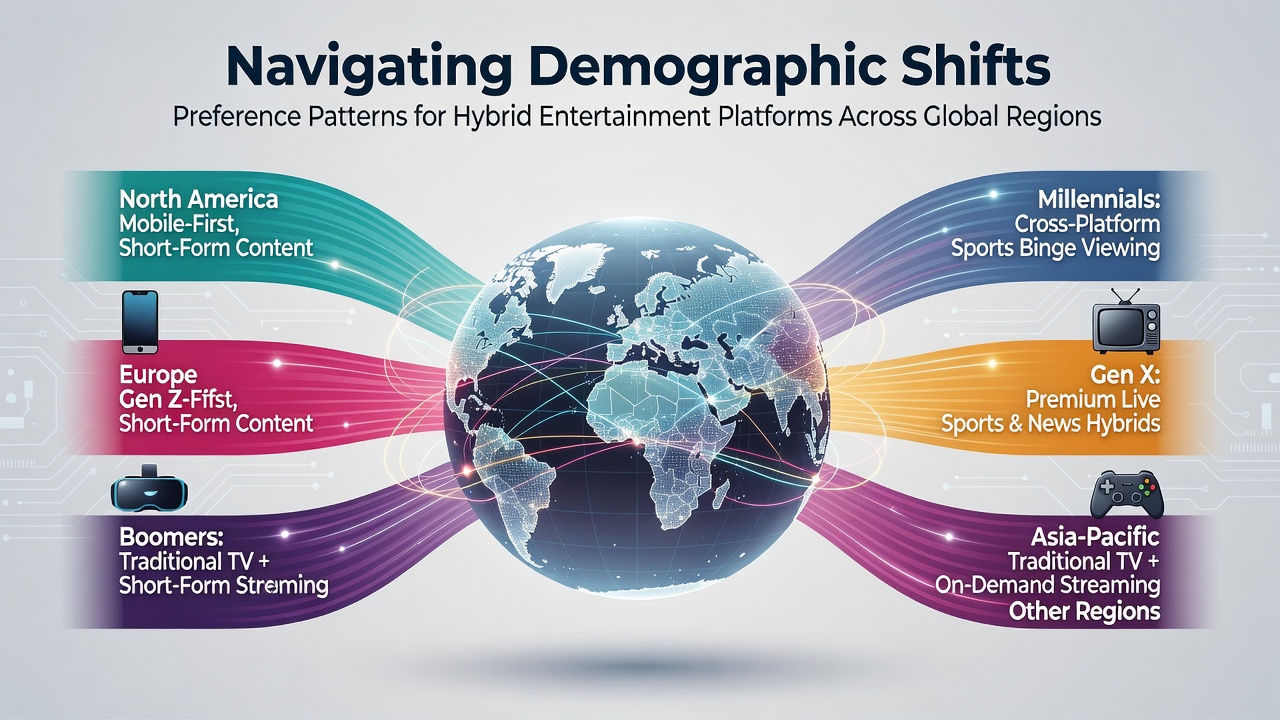
Navigating Demographic Shifts in Preference Patterns for Hybrid Entertainment Platforms Across Global Regions
Demographic changes continue to reshape how audiences engage with hybrid entertainment platforms that combine live interaction, on-demand content, and cross-device functionality, and data from multiple regions shows distinct patterns emerging by age cohort, location, and technology access levels. Researchers tracking these movements note that younger groups favor platforms blending real-time social features with personalized libraries, whereas older demographics often prioritize seamless transitions between broadcast and streaming formats.
Key Drivers Behind Preference Changes
Population aging in several developed markets coincides with rising adoption of mobile-first interfaces, creating pressure on platform operators to adjust content delivery models, and studies from academic institutions indicate that households in urban centers demonstrate higher uptake of interactive elements such as live polls during streamed events. Meanwhile rural areas show slower integration due to infrastructure gaps, although satellite and 5G expansions have narrowed those divides in recent years.
Income distribution also plays a measurable role, with middle-income brackets in emerging economies displaying strong interest in subscription bundles that merge gaming, video, and audio services into single accounts. Evidence from industry reports highlights that these bundles reduce churn rates when they incorporate localized language options and regional content partnerships.
Patterns Across Asia-Pacific Markets
Across Asia-Pacific territories, mobile-native generations drive demand for platforms that merge short-form video with extended narrative series, and figures released in July 2026 by regional media authorities reveal accelerated growth in hybrid usage among users aged 18 to 34. Platforms in markets such as South Korea and Singapore have introduced features allowing viewers to switch between live esports broadcasts and archived tournament footage without leaving the application.
Observers note that family-oriented households in Australia and New Zealand increasingly select services offering simultaneous multi-user profiles with synchronized viewing capabilities, and government statistical agencies have documented corresponding rises in average daily engagement times. These developments occur alongside regulatory adjustments that encourage local content quotas within hybrid catalogs.
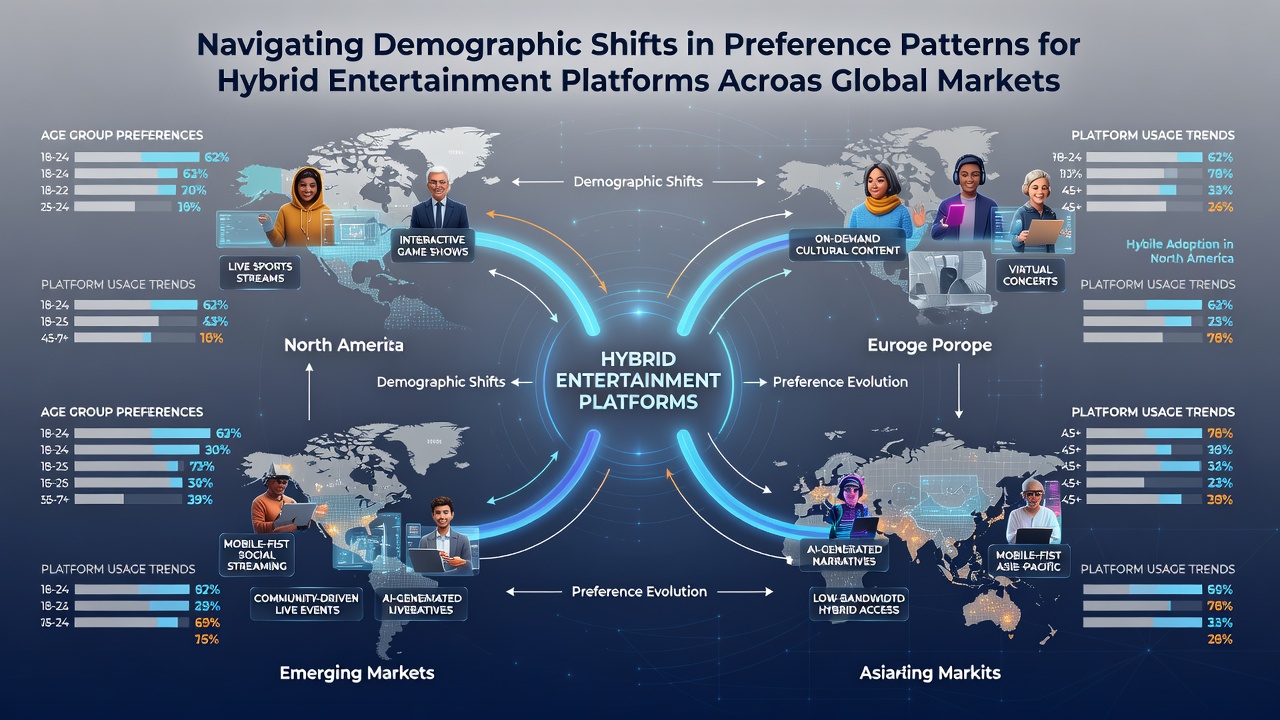
European and North American Developments
European markets display notable contrasts between northern and southern regions, where Nordic countries report higher penetration of augmented-reality overlays during live sports streams while Mediterranean audiences lean toward hybrid platforms centered on music and cultural events. Data compiled by the European Audiovisual Observatory points to steady increases in cross-border subscriptions, particularly among bilingual users who access content from multiple language markets.
In North America, census updates show shifting household compositions that favor flexible payment models allowing individual family members to curate separate hybrid experiences within shared accounts. Research from university media studies departments indicates that platforms incorporating user-generated content alongside professional productions retain attention spans longer across mixed-age groups, and Canadian regulatory filings confirm ongoing investments in accessibility features such as captioning adn audio description standards.
Influence of Emerging Technologies
Artificial intelligence recommendation engines and cloud-based rendering now support more fluid hybrid experiences, enabling real-time adaptation of content based on viewer location and device type, and trade association surveys document corresponding improvements in user retention metrics. Yet infrastructure disparities remain evident in parts of Latin America and Africa, where connectivity speeds limit full utilization of interactive features despite growing smartphone ownership.
Those who monitor global digital trends point out that partnerships between telecommunications providers and content creators have begun addressing these gaps through subsidized data plans tied to specific hybrid services. Such arrangements appear most effective when they align with local cultural preferences rather than imposing uniform interface designs.
Conclusion
Global demographic shifts continue to influence preference patterns for hybrid entertainment platforms, producing varied outcomes that depend on regional infrastructure, age distribution, and economic factors. Continued monitoring by regulatory bodies and research organizations will clarify how these patterns evolve beyond 2026, particularly as new connectivity technologies reach wider populations.