Unpacking the Dynamics of Instant Payout Systems Across Global Betting Networks
Tina Vogel · Aug 23, 2026

Unpacking the Dynamics of Instant Payout Systems Across Global Betting Networks
Instant payout systems now operate as core infrastructure within global betting networks, connecting operators to players through automated verification layers and multi-currency rails that process withdrawals in seconds rather than days; these frameworks rely on integrated APIs that link banking partners, digital wallets, and blockchain ledgers while satisfying jurisdictional rules that differ sharply between North America, Europe, Asia-Pacific, and emerging African markets.
Core Technologies Driving Real-Time Settlements
Operators achieve sub-minute processing times through layered verification that combines biometric checks, device fingerprinting, and automated risk scoring engines, and these systems often route transactions via e-wallets or stablecoin channels that bypass traditional banking delays. Data from the Alcohol and Gaming Commission of Ontario shows that licensed platforms in that province recorded average withdrawal completion times dropping below 90 seconds for verified accounts during the first half of 2026, a shift tied directly to expanded use of open banking protocols and tokenized payment rails. Meanwhile, networks in Australia have integrated similar infrastructure under oversight from the Australian Communications and Media Authority, where real-time identity matching reduces manual reviews that previously extended payout windows to several hours.
Blockchain-based ledgers add another dimension by recording each transaction on immutable chains that allow instant reconciliation across borders, and this approach supports multi-jurisdictional operators who must reconcile balances in multiple currencies without waiting for interbank settlement cycles. Researchers at the University of Nevada, Reno documented how these distributed systems cut reconciliation errors by 47 percent compared with legacy batch processing in a 2025 industry analysis, highlighting measurable efficiency gains that scale as betting volumes rise.
Regional Regulatory Approaches and Compliance Patterns
Regulatory bodies impose distinct requirements that shape how instant payouts function in practice, and these rules often dictate which payment instruments qualify for rapid release versus those subject to hold periods. In Canada, provincial frameworks emphasize source-of-funds verification before any automated release occurs, whereas several European Union member states require operators to maintain segregated player funds that can be disbursed automatically once identity and anti-money-laundering checks clear. The Malta Gaming Authority, for instance, updated its technical standards in early 2026 to mandate that all licensed operators publish maximum payout timelines publicly, creating greater transparency for players who track processing across multiple networks.
Network Effects and Cross-Border Data Flows
Global betting networks gain resilience when instant payout capabilities extend across multiple operators and regions, allowing liquidity to move efficiently during peak events such as major sports tournaments or seasonal promotions. August 2026 saw several platforms report record withdrawal volumes tied to international football competitions, with systems handling simultaneous requests from users in Canada, Singapore, and South Africa without degradation in completion rates. These interconnected rails also enable shared fraud-detection databases that flag suspicious patterns in real time, reducing chargeback exposure for operators who participate in cross-network information exchanges.
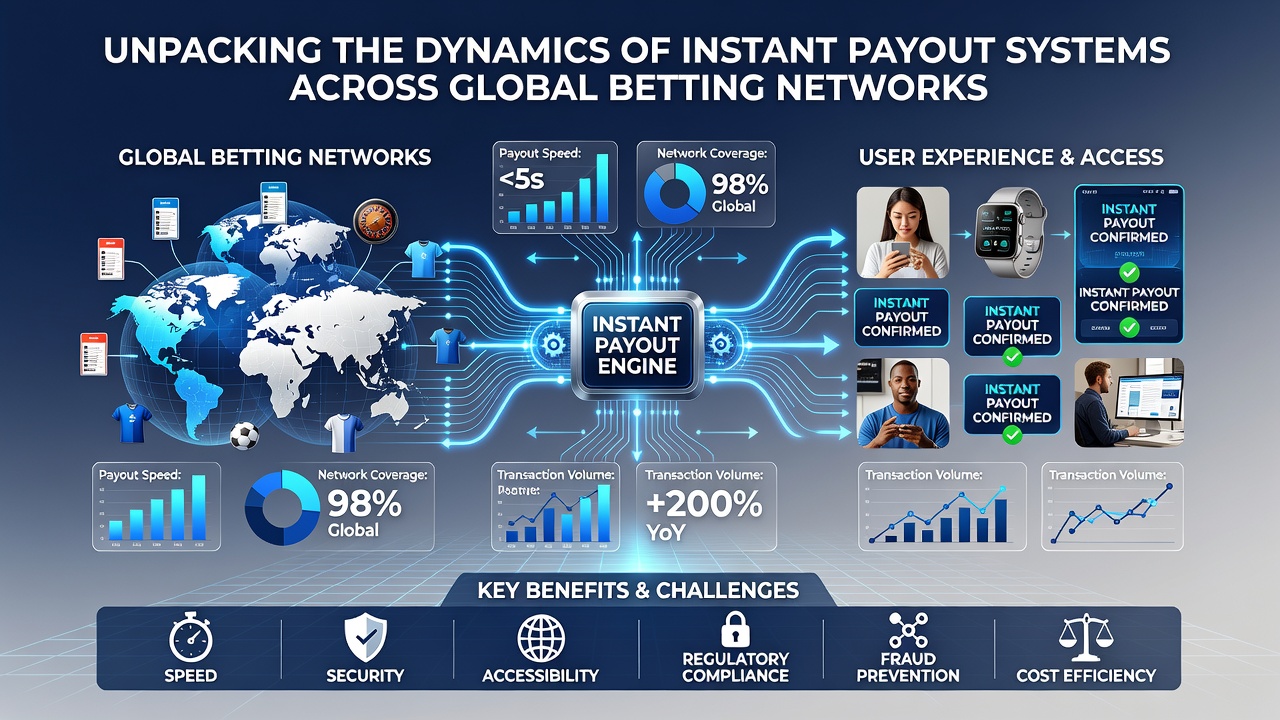
Observers note that smaller regional operators increasingly plug into these larger infrastructures through white-label solutions, gaining access to the same verification speed and banking partnerships previously available only to major brands. This pattern has accelerated since 2025 as API marketplaces lowered integration costs, allowing even mid-tier platforms to offer instant options that compete directly with established networks.
Operational Challenges and Risk Mitigation
Despite technical advances, instant payout systems still encounter friction around volatility in cryptocurrency values, sudden regulatory shifts, and spikes in user activity that strain backend capacity. Operators counter these issues with dynamic reserve pools and automated throttling mechanisms that slow non-critical withdrawals during extreme load periods while preserving priority for verified high-volume players. Figures released by the Nevada Gaming Control Board in mid-2026 indicated that platforms maintaining at least three redundant payment corridors experienced 62 percent fewer service interruptions than those relying on single providers.
Security protocols continue to evolve in tandem, incorporating machine-learning models that score each withdrawal request against historical behavior patterns before funds leave the operator’s control. These models adjust thresholds in real time based on emerging threat intelligence shared among network participants, creating a collective defense layer that individual operators could not sustain alone.
Conclusion
Instant payout systems across global betting networks reflect a convergence of technology, regulation, and operational practice that continues to standardize around faster settlement while adapting to local requirements. As August 2026 data illustrates, jurisdictions that pair clear technical standards with flexible payment options see measurable improvements in processing speed and player retention metrics, and these trends point toward further integration of open banking, tokenized assets, and cross-border verification layers in the coming years.